
02 Apr 2026 | How to Build a Global Professional Network in 2026 Using Alumni Networks & LinkedIn

0
60
Introduction
Academic excellence is no longer a prerequisite for career success in today's globalised society. In 2026, employers will pay closer attention to job seekers with international exposure, professional development, and cross-cultural connections across multiple countries. Acquiring the skills to build a global business network has emerged as one of the most essential career skills for Indian students planning to study abroad.
Trends in global recruitment over the past decade have consistently indicated that networking plays a significant role. According to LinkedIn's Global Talent Trends report, among the numerous vacancies posted by foreign companies, most are filled through referrals or professional connections rather than through direct applications. This calls for ensuring that students build a global professional network well before entering the labour market.
Parents are increasingly aware of this. The value of an international degree is significantly greater when it is complemented by professional relationships that help students apply their learning in real-world settings. That is why alumni networks and LinkedIn have become two of the strongest instruments of international career development.
This blog, in a clear and accessible way, explains how Indian students can leverage alumni networks and LinkedIn in 2026 to build a global professional network.
What Does It Mean to Build a Global Professional Network in 2026?
Build a global professional network entails developing meaningful relationships with individuals across countries, industries, and institutions to facilitate learning, career growth, and informed decision-making. Unlike traditional networking, global networking is not limited by geographic borders and typically occurs through digital platforms, schools, and professional networks.
In networking, the types of networking have evolved dramatically in 2026. In today's employer-driven society, the world demands that students be culturally sensitive to international work environments, industry requirements/ needs, and expectations for professional communication. This means that when students build a global professional network, they are not simply amassing contacts or gaining credibility.
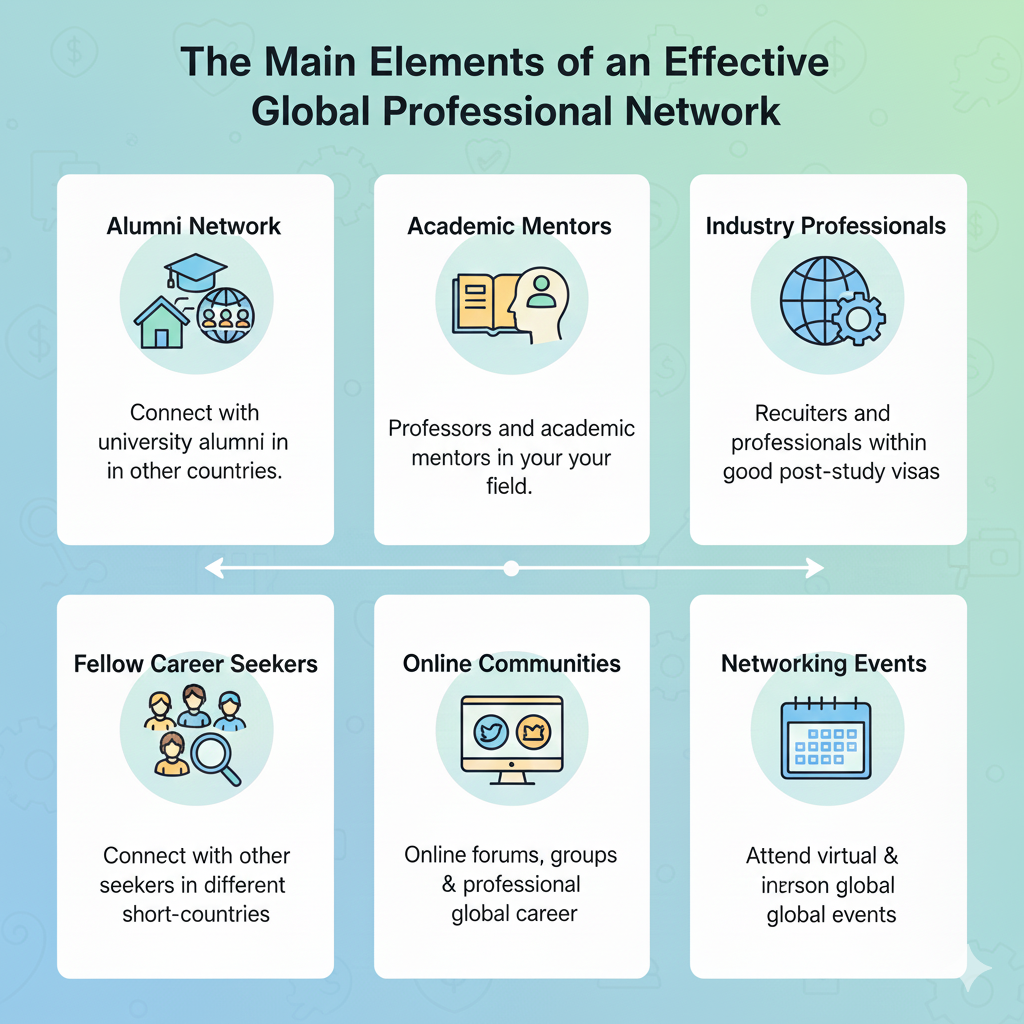
The main elements of an effective global professional network are:
- In higher institutions of learning, the alumni are in other countries.
- Professors and academic mentors.
- Recruiters and professionals within the industry.
- Career seekers in other countries.
It also helps Indian students gain transparency, confidence, and access to opportunities that are not otherwise marketed openly.
Why Indian Students Need a Global Professional Network Before Studying Abroad
When studying abroad, Indian students often encounter issues related to new hiring practices, cultural misunderstandings, and limited access to the local professional network. This is where the need to develop a global professional network becomes necessary, not optional.
Students who begin networking sooner than they will be leaving India are better placed to know:
- Their destination country recruitment procedure.
- The expectations of the employers of international graduates.
- Which skills and experiences are the most important?
From an end-user perspective, I have found that students who build a global professional network early in life feel secure during internship, campus interview, and career fair periods. They also become stronger when they are forced to compete in the job market.
For parents, this kind of preparation will ensure their child is not only taught about international issues but also introduced to the realities of professional life.
International Career Networking
International career networking focuses on developing international professional relationships that enable career mobility. Most companies will also operate across multiple countries in 2026, and professional adaptability and cross-cultural communication will be highly valued.
A good international career networker is aware of professional etiquette, communication styles, and other workplace expectations in different territories. Students in India who have the opportunity to pursue international careers and build networks at a young age will be better equipped to avoid the pitfalls they often fall into.
Some career opportunities students may not have considered include global research, multinational corporate roles, and international entrepreneurship, among others, which can be found through international career networking. This exposure makes education abroad more focused and results-oriented.
How International Universities Support Global Professional Networking?
Universities abroad play a key role in helping students build a global professional network. Most top institutions have established career support programs that connect students with industry professionals and alumni.
The support systems usually entail:
- Workshops on employability and career counselling.
- Alumni mentoring.
- Networking in the industry and guest lectures.
- Placement services and internship.
International career networking through alumni portals and professional platforms is a prevalent way to promote career networking within universities in countries such as the UK, Canada, Australia, and across Europe. Students who work through such materials find it easier to build a global professional network in an informal setting.
The number of professional opportunities available to a student during and after their studies is significantly enhanced by choosing a university with a large alumni base.
Alumni Networks and Their Role in Global Career Growth.
Alumni networks are the ideal way to establish a global professional network. Alumni know the academic process, cultural adaptation, and business concerns of international students.
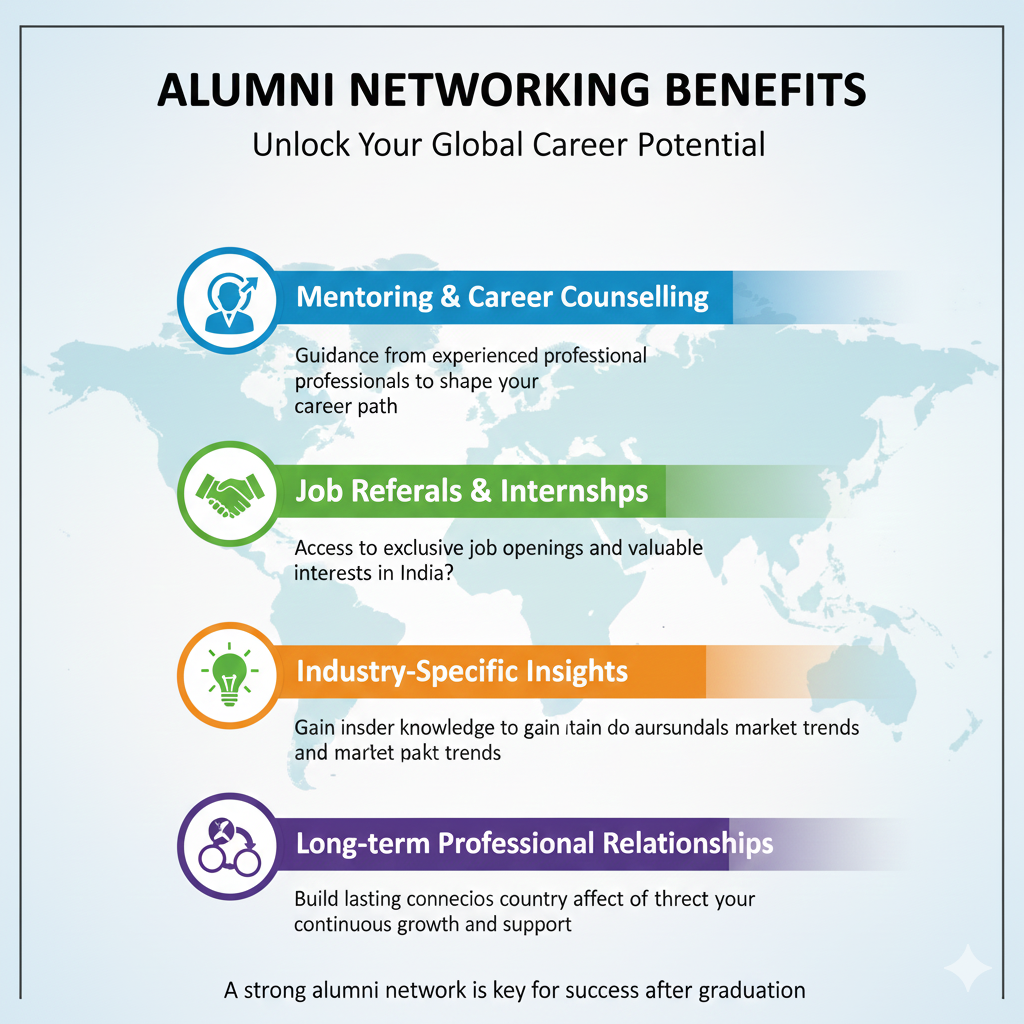
A good relationship with alumni can typically lead to:
- Mentoring and career counselling.
- Job referrals and internship.
- Industry-specific insights
- Long-term professional relationship.
Best tips for successful Alumni Networking among Indian students.
Successful students follow effective alumni networking strategies, not random strategies. Trust and professional respect are developed in the alumni networking strategies.
The standard alumni connecting strategies are:
- Through contacting the formal university alumni.
- Attending webinars and networking organised by the alumni.
- Instead of working, requiring informational conversations.
When used consistently, these alumni networking strategies help students build a global professional network that grows over time. This respectful approach to ethics would ensure alumni are willing to support subsequent students.
LinkedIn Networking for Students in 2026.
LinkedIn remains one of the most robust tools for build a global professional network in 2026. LinkedIn provides Indian students with access to professionals, recruiters, and alumni from the world's top universities.
Recruiters are increasingly turning to LinkedIn to filter candidates based on factors beyond academic achievement. This makes LinkedIn one of the critical career-preparation competencies for students globally.
Step-by-Step Guide to LinkedIn Networking for Students
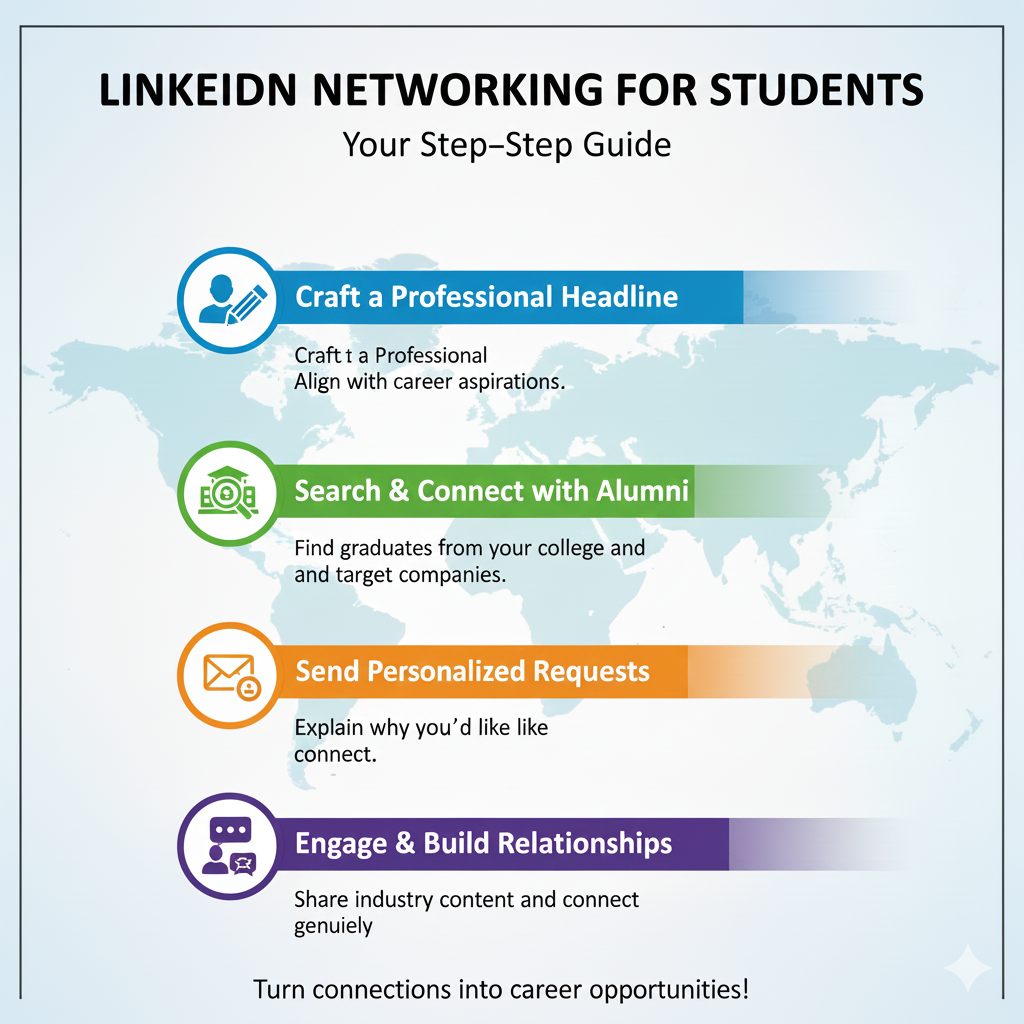
The first step toward effective networking on LinkedIn is a strong career profile that includes academic interests and skills, as well as career objectives.
Key steps include:
- Writing a concise professional headline which was in accordance with career aspirations.
- According to college search engines and graduates.
- Arranging personalised connection requests.
- Dealing in industry-related content.
- long-term Professional relationships.
Students who prepare for LinkedIn networking are well-positioned to build a global professional network that will help them secure an internship and a job.
Alumni Networks vs LinkedIn – What Works Best for Global Networking?
Alumni networks and LinkedIn play significant roles in helping students build a global professional network, though they are used differently.
|
Aspect |
Alumni Networks |
|
|
Trust Level |
Very high |
Moderate |
|
Reach |
Limited to the institution |
Global |
|
Best Use |
Mentorship, referrals |
Job discovery |
The most suitable strategy for students is alumni networking, in addition to LinkedIn networking. They integrate to enhance global career networking outcomes and provide balanced disclosure of professions.
How Global Professional Networking Impacts Real Student Careers
The role of global professional networking in students' academic-to-employment transition is direct. The active construction of the international professional network provides students with greater practical exposure, a stronger sense of career direction, and greater professional confidence.
Chance to receive an internship and employment:
Networking with alumni and professionals will help students access hidden opportunities. Referrals increase the likelihood of shortlisting for interviews and improve international career networking success.
Clear career direction:
Professional debating would ensure students are aware of the industry's real demands, enabling them to make informed choices about subjects, skills, and internships in their studies.
Greater confidence and readiness:
The constant exposure to global professionals will strengthen students' communication skills, cultural awareness, and interview confidence, making them more marketable.
Extensive support and counselling:
Long-term career advice can also be provided through alumni mentorship, and parents are satisfied that their child is receiving a high-quality education abroad, which will lead to a stable career.
Professional Networking Tips 2026
Following the right professional networking tips 2026 will help students navigate international professional environments. These professional networking approaches in 2026 focus on authenticity, patience and consistency.
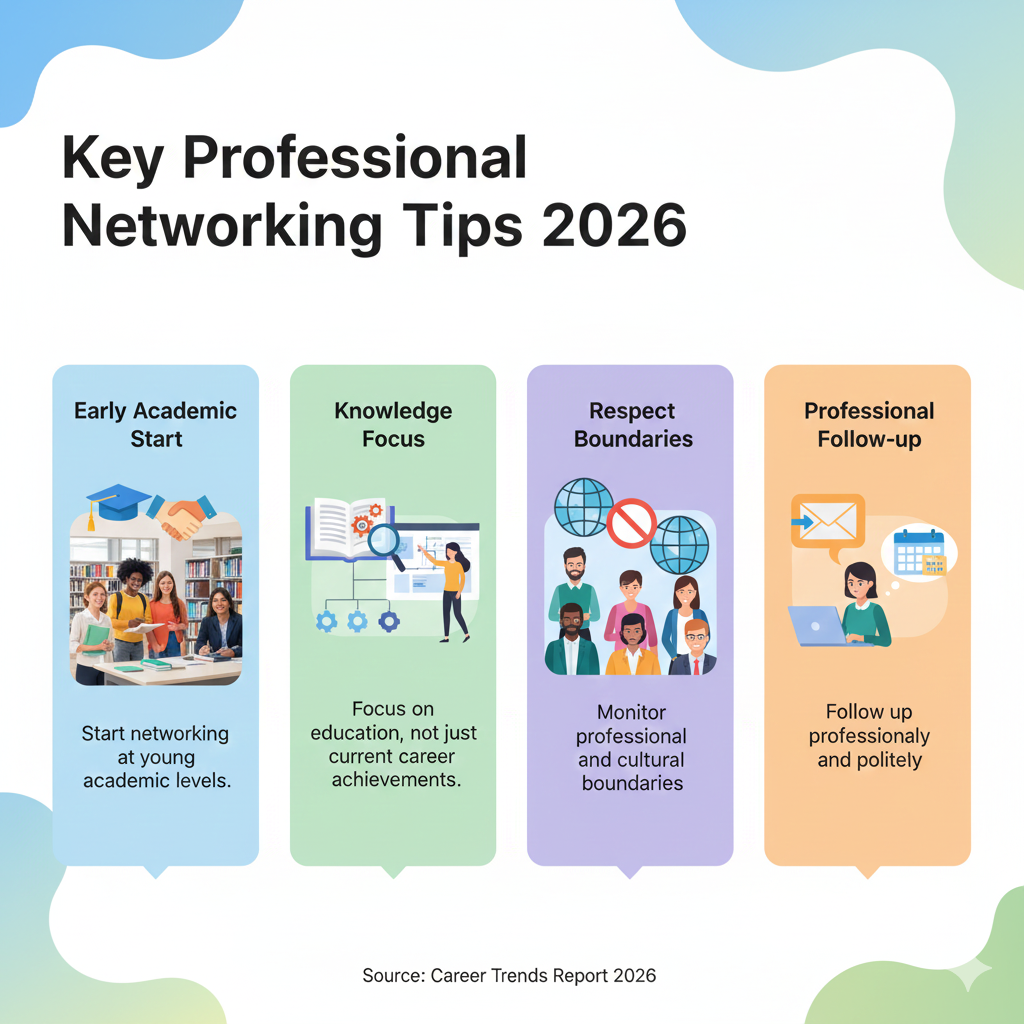
Key professional networking tips 2026 include:
- Start networking at the young academic levels.
- Focus on education and not on current career achievements.
- Monitor professional and cultural boundaries.
- Follow up professionally and politely.
By using these 2026 professional networking tips, students can build a global professional network, making it easier to navigate the long-term career development process.
Familiar Networking Mistakes Students Should Avoid
Many students fail to leverage opportunities due to simple networking mistakes that are easy to avoid, yet they still make them when build a global professional network.
- Sending of generic or copy-paste messages automatically to professionals or alumni.
- Requesting work or internships as soon as possible, as opposed to creating relationships in advance.
- Neglecting the professional etiquette and cultural norms in cross-cultural communication.
- The inability to possess LinkedIn profiles or use them.
- Focusing on the degree of connections rather than quality.
Students can maximise their use of LinkedIn for networking as students and alumni, and avoid the pitfalls mentioned to expand their international career networks.
How Gateway Educonnect Supports Students in Building a Global Professional Network
Gateway Educonnect has helped Indian students build a global professional network for 15 years, aligned with their career and academic goals.
Support includes:
- One strength of the university selection is the alumni strength.
- Career-focused counselling
- Ethics and related tips in alumni networking.
- Structured support for LinkedIn networking for students
This comprehensive approach will enable international career networking for both new and returning students effectively.
Frequently Asked Questions (FAQs).
Q1: When is the appropriate moment to start build a global professional network all over the world?
A1: The student should plan to start as early as 6-12 months before their study abroad to make the most of it.
Q2: Is LinkedIn adequate when it comes to the global networking of careers?
A2: LinkedIn approaches alone are not highly effective; however, combined with alumni networking strategies, they yield the best results.
Q3: What are the advantages of alumni networks for international students?
A3: The mentor, refer, and provide information to the students, which would help them to form a professional network in the global community.
Q4: What are the biggest pitfalls when networking?
A4: Some generic messages, premature employment seeking, etiquette neglect, and LinkedIn profile forgetting are behaviours that should be avoided at all costs (A4).
Q5: What are the tips for professional networking amongst students in 2026?
A5: Be on time, relate to quality, engage easily, be consistent in following up and exploit LinkedIn and the alumni network.
Conclusion
Global build a global professional network is one of the requirements that Indian students aspiring to succeed in their careers abroad in 2026 must have. This can be facilitated by incorporating alumni networking strategies and effective student LinkedIn networking, so students can access mentorship, internship, and employment opportunities that would otherwise be unavailable through traditional channels. Early-career networking in an international context will help students gain clarity, build confidence, and acclimatise to working in the global field. Compliance with ethical best practices in professional networking post-2026 will help students make healthy relationships and a strong professional reputation. It is not the case that students are employable solely because they built networks both before and during their studies overseas; such networks also contribute to sustainable career development. This is reassuring for parents that their child is not only receiving a good education in a new country but also making a sound career decision. With the right attitude, any student can navigate the international market and achieve their career goals.
For more assistance please visit us study abroad consultancy, and avail of our wide range of services for students on destinations like study in USA, study in UK, study in Canada, study in Australia, study in ireland and many more country.

Author Bio
Abhinav Jain - Founder, Gateway Educonnect and Director.
B.Tech, MBA, AI and Global Education Specialist.
More than 15 years of professional experience in leading students along international routes based on politics and innovation.