
04 Apr 2026 | How Scholarship Guidance Can Reduce Your Study Abroad Cost

0
84
Introduction
Going to study overseas is a dream for most students who want access to international learning, globalisation, and improved career opportunities. Nevertheless, the cost of studying abroad is often a major concern for students and their families. Tuition and accommodation, travel, and day-to-day living costs are rapidly increasing, which is why financial planning is needed. UNESCO reports that over 6 million students study abroad each year, underscoring the growing demand for educational opportunities worldwide. Despite this need, most students do not even consider applying for a scholarship, which would save them a lot of money during their studies. This is the point where the scholarship advice on studying overseas is invaluable.
By providing systematic scholarship guidance for abroad education, the student will be able to find appropriate funding sources and write a strong scholarship application, while ensuring that the documents are properly prepared. Having worked with students for more than 15 years, I have personally witnessed how funding advice and tuition support can transform a rather expensive study-abroad dream into a reality.
Why Are Scholarships Important for Studying Abroad?
International education involves costs beyond tuition fees, underscoring the importance of scholarships in providing access to global education.
Key Costs of Studying Abroad
|
Expense Category |
Average Annual Cost (Approx.) |
|
Tuition Fees |
$15,000 – $45,000 |
|
Accommodation |
$6,000 – $12,000 |
|
Living Expenses |
$5,000 – $10,000 |
|
Health Insurance & Travel |
$1,500 – $3,000 |
These costs may get out of hand without proper financial planning. This is why scholarship counselling on studying abroad helps students find opportunities that offer financial aid.
Types of Scholarships Available
- Government Scholarships: Government-sponsored programs in various countries also offer substantial tuition subsidies to bright international students seeking higher education abroad.
- University Scholarships: Scholarships in most universities are either merit-based or need-based, reduce university fees, and are awarded as a token of academic performance.
- Prepared by private organisations: There are numerous international organisations and foundations worldwide that offer scholarships to support international students pursuing specific courses.
By providing proper scholarship guidance for abroad education, students are taught to focus on such opportunities and make competitive scholarship applications.
This is my observation in my capacity as an advisor to students: with the help of scholarships, a student's dream of travelling to a foreign country becomes a tangible goal.
How scholarship guidance for abroad education helps students?
The process of applying for a scholarship is far beyond filling out forms. It involves planning, research, and learning about the expectations of scholarship.
Scholarship guidance for abroad education helps students navigate this complex process.
Guidance and its Support of Students
- Finding appropriate scholarships
The advisors assist students in recognising scholarships that align with their academic achievements and career goals, thereby increasing their chances of success.
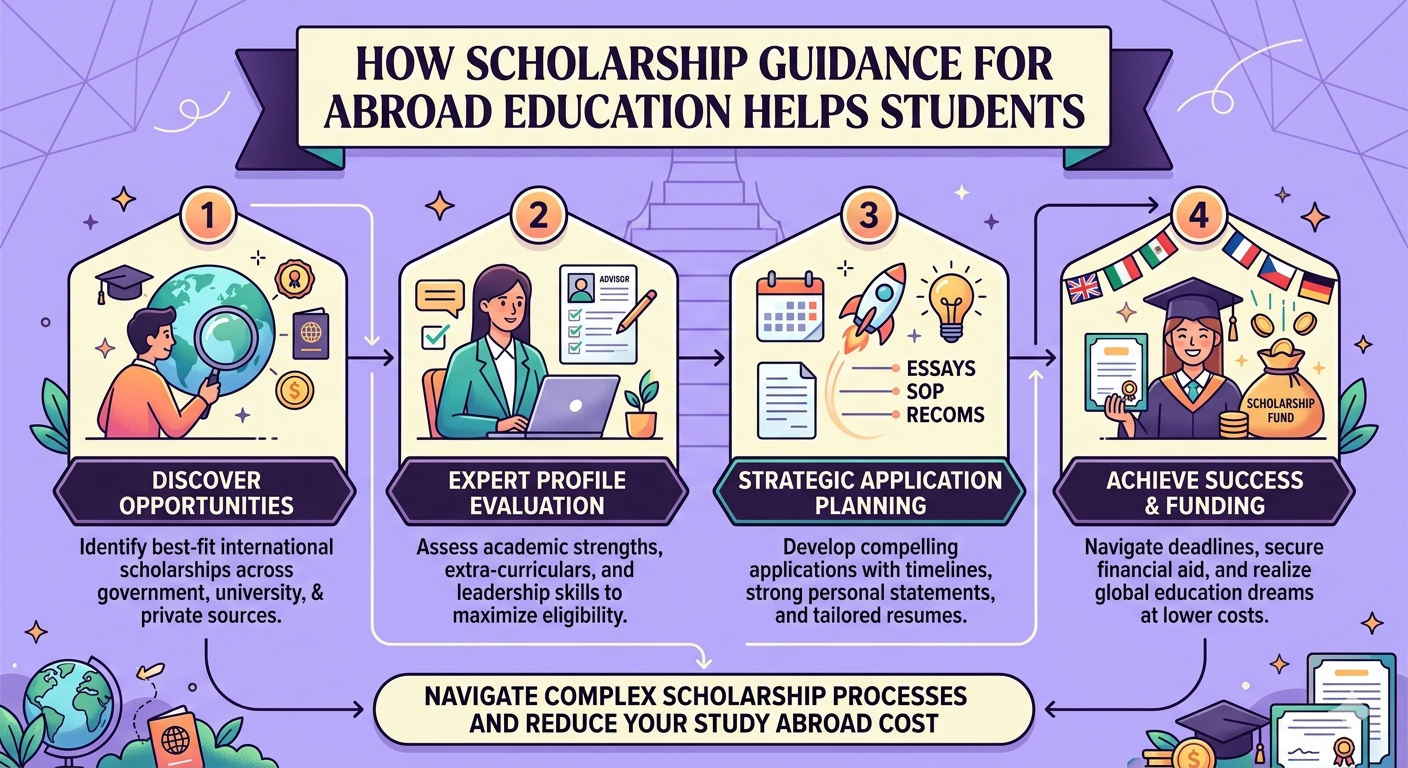
- Knowing the eligibility criteria
Most scholarships are very strict, and professional advice would be to help students focus on opportunities for which they meet the eligibility criteria.
- Application strategic planning
Students are coached on the importance of prioritising scholarship, meeting deadlines, and preparing competitive applications.
- Improving approval chances
Through excellent scholarship guidance for abroad education, students learn how to market their success in scholarship applications.
At some point in my career, I recall the experience of a student in Jaipur who could not imagine that studying in the UK would be financially out of reach. Upon receiving scholarship advisory to study abroad, he received a partial scholarship from the university and completed his master's degree.
Support in Scholarship Applications
It takes dexterity, systematicness, and precision to prepare formidable scholarship applications.
Scholarship committees consider various criteria beyond grades, such as leadership potential, academic performance, and future career prospects.
Key Elements of Strong Scholarship Applications
- Personal statements and essays.
Using these essays, students can express their ideas and ambitions, their accomplishments, and their driving forces in a convincing manner that resonates with scholarship reviewers.
- Satisfying the requirements of the applications.
There are certain rules for every scholarship, and when adhered to, the application remains relevant and competitive.
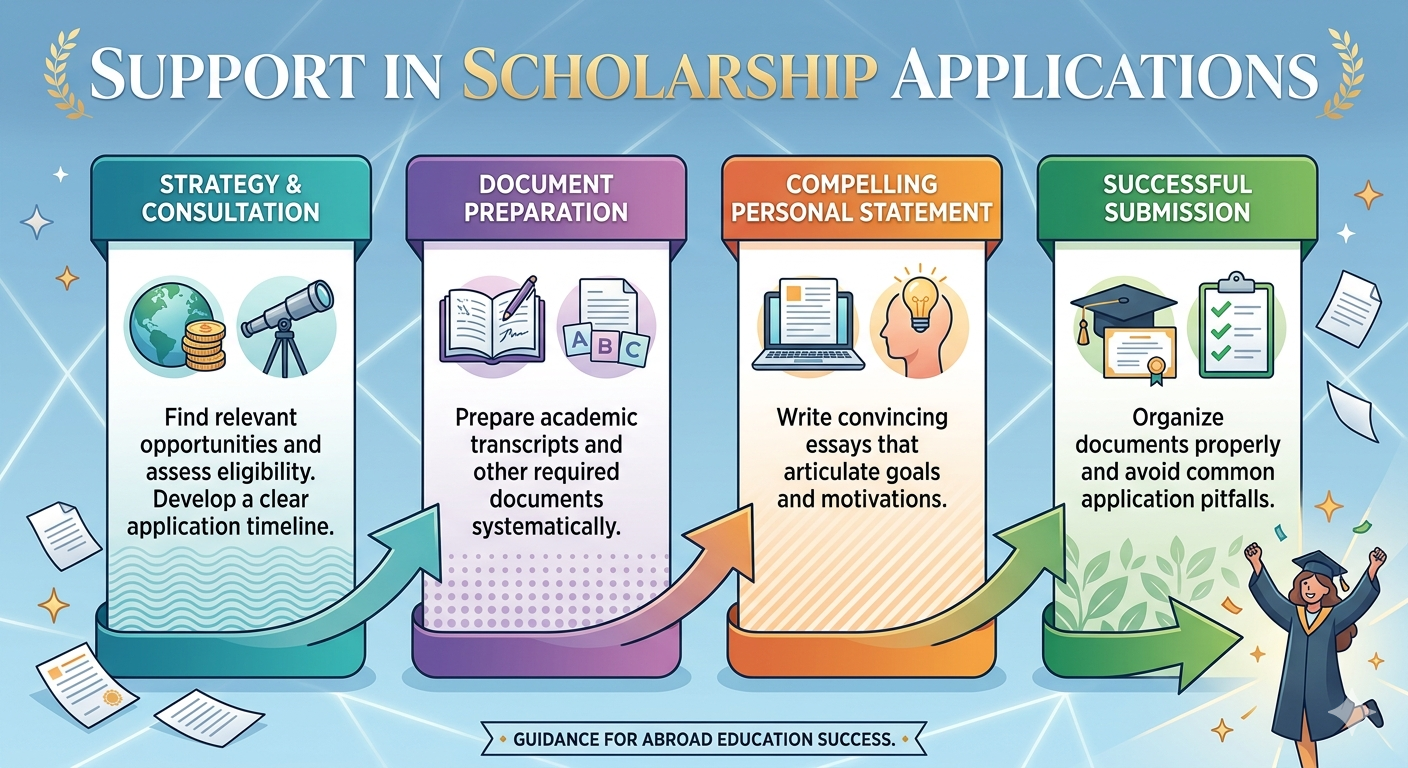
- Handling timeframes successfully.
Most scholarships have a tight deadline for submission, and to avoid missing out on such opportunities, one must be well organised.
- Preventing the pitfalls of application.
Students often miss their chance because of incomplete forms or poorly written essays, and this can be avoided with proper instructions.
Having well-organised advice on studying abroad, students will have a good chance of improving the quality of their scholarship applications.
Document Preparation for Scholarship Success
Document preparation is another important stage of the scholarship process. The documents may be incomplete or poorly organised, which can lead to a weak profile of a good student.
Important Documents for Scholarships
- Academic transcripts and certificates: These are the official records of a student's academic performance and are required by virtually all scholarship applications.
- Letters of recommendation: Excellent recommendation letters from professors or mentors help scholarship committees see what the student is capable of and what he has accomplished.
- Statement of Purpose (SOP): A clear, well-developed SOP explains the student's academic goals and demonstrates why they should be funded.
- Financial and achievement records: The documentation helps confirm eligibility and highlights the student's achievements.
Correct preparation of documents can ensure that scholarship applications meet the proper standard.
In my experience as a student guide, one of the most significant factors in a scholarship's success is proper preparation of the document.
I recall a student who presented incomplete documents in an application for a scholarship first. The student received tuition support at a university in Europe after revising and preparing the document.
Funding Advice to Reduce Overall Study Costs
Scholarships do not always cover all costs, which is why students seeking international education need professional advice on funding.
Sound financial advice will help students pool a variety of financial resources to cover the cost of studying abroad.
Practical Funding Strategies
- Bringing together a series of scholarships.
Students may also apply to multiple scholarships at the same time, and there is a good chance of receiving substantial tuition coverage.
- University assistantships
Most colleges and universities have research or teaching assistants available, who are financially compensated or offer partial tuition.
- Living expenses budget planning.
Knowing about accommodation, transport, and day-to-day expenses helps students spend wisely.
- Researching grants and funding plans.
Besides scholarships, many universities also offer grants that can reduce the overall cost of education.
Providing organised funding advice helps students develop a sustainable financial plan.
As an international student worker, I have witnessed how proper advice on funding enables international students to complete their degrees without an undue financial burden.
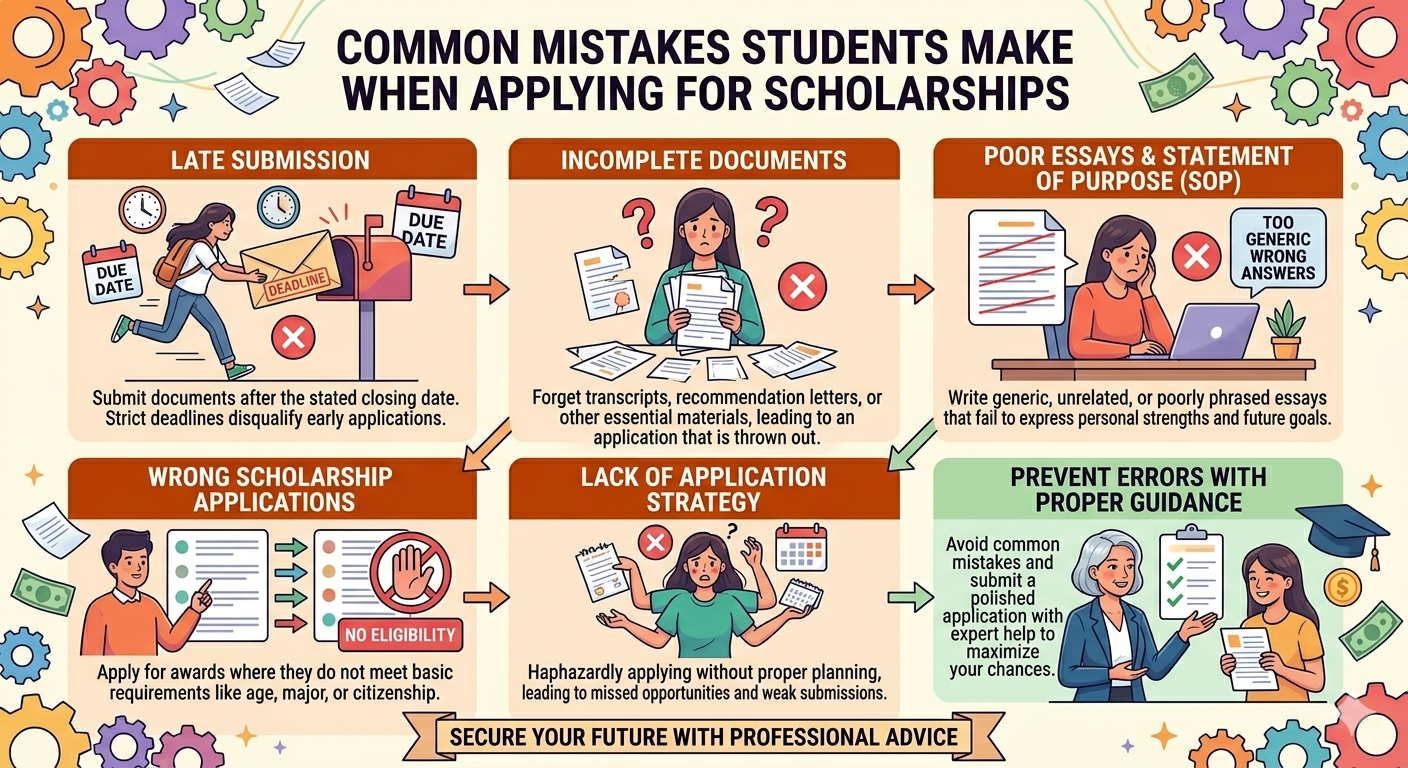
Common Mistakes Students Make When Applying for Scholarships
A lot of students end up missing a good opportunity because of mistakes that they could have avoided during the process of making their application.
Common Errors in Scholarship Applications
- Late submission of application forms.
Most scholarships have very rigid time schedules, and an application that is lost due to the deadline is automatically disqualified.
- Filing incomplete documents.
Bad document writing usually results in loss of transcripts or recommendation letters, hence, undermining the application.
- Making irrelevant scholarship applications.
Students, at times, apply for the scholarships without verifying the eligibility requirements, and this minimises their chances of success.
- Poor essays and individual statements.
Poorly written or generic essays might not be able to bring out the strengths of the student and his/her ambitions.
Education scholars should be able to provide proper scholarship guidance for abroad education to keep them out of such errors and enhance the quality of the scholarship applications.
When Should Students Start Scholarship Planning?
When it comes to the success of scholarship, timing becomes a very important factor. Ideally, students are supposed to begin planning their scholarships early enough so that they can apply to universities.
Ideal Scholarship Timeline
|
Stage |
Recommended Time |
|
Research scholarships |
12 months before intake |
|
Start applications |
8–10 months before intake |
|
Complete document preparation |
6–8 months before intake |
|
Submit scholarship applications |
6 months before intake |
Early commencement enables the students to be well guided in terms of scholarship to study abroad, prepare good scholarship applications and make careful preparation of their documents.
Those students who start planning early as well can access more chances of having their tuition supported and can receive better advice on funding.
Conclusion
One of those potent opportunities is studying abroad, which may influence the academic and professional future of a student. Nonetheless, international education is not pursued because of financial demands.
Having appropriate scholarship guidance for abroad education, students can find an alternative that would greatly decrease their studying costs. Organised advice is better in applying to scholarship programs, preparing documents, and offering viable scholarship advice that will make international education affordable.
Having been the guide to students for over 15 years, I have observed how the proper support can change the experience of an international student in education. Numerous students who already thought that they could not afford to study abroad due to their financial status have been able to complete their degrees after being awarded tuition help in the form of scholarships.
To students who are intending to study abroad, having the benefit of professional scholarship guidance for abroad education is a move that one can take early enough to initiate opportunities that can make international education an accessible and realistic goal.For more assistance please visit us study abroad consultancy, and avail of our wide range of services for students on destinations like study in USA, study in UK, study in Canada, study in Australia, study in ireland and many more country.

FAQs
What is international education scholarship advice?
It assists students in identifying appropriate scholarships and preparing effective scholarship applications, ensuring the correct documentation to receive tuition assistance.
What is the effect of scholarship guidance in lowering the cost of studying abroad?
It offers professional advice on the funding and assists students in becoming eligible for scholarships, reducing tuition and total costs.
Which documents should applicants for a scholarship provide?
The documents usually submitted are academic transcripts, reference letters, and a Statement of Purpose, prepared by the appropriate document preparation service.
At what time should students begin applying to scholarships?
They expect students commence scholarship applications and planning at least 8-12 months before their planned intake.
Are multiple scholarships available to students?
Yes, students are eligible to apply for various scholarships to increase their chances of receiving tuition aid.
Author Bio
Abhinav Jain - Founder, Gateway Educonnect and Director.
B.Tech, MBA, AI and Global Education Specialist.
More than 15 years of professional experience in leading students along international routes based on politics and innovation.