
16 Jun 2026 | Study in Japan: Complete Guide for International Students in 2026

0
57
Introduction: Study in Japan
Japan is now one of the most enticing destinations for students who want to attend world-class education, exposure to the best technology and good global career opportunities. The country has been proactive in accommodating international students in the last ten years in terms of government programs, English-based programs, and the provision of full-time scholarships. Because of this, there are increasing cases of more and more Indian students and parents considering the possibilities of studying in Japan to pursue higher education.
Japan has good educational opportunities, a secure setting and internationally certified credentials. Japan has great educational prospects and a secure and culturally diverse environment. This is the ultimate handbook on all you want to know about Edo in Japan, whether in terms of universities, prices, scholarships, visas, career, and the application requirements. When you are planning your international education experience, this guestbook will help you know how to study in Japan and make the correct choices regarding your future.
Why Study in Japan 2026?
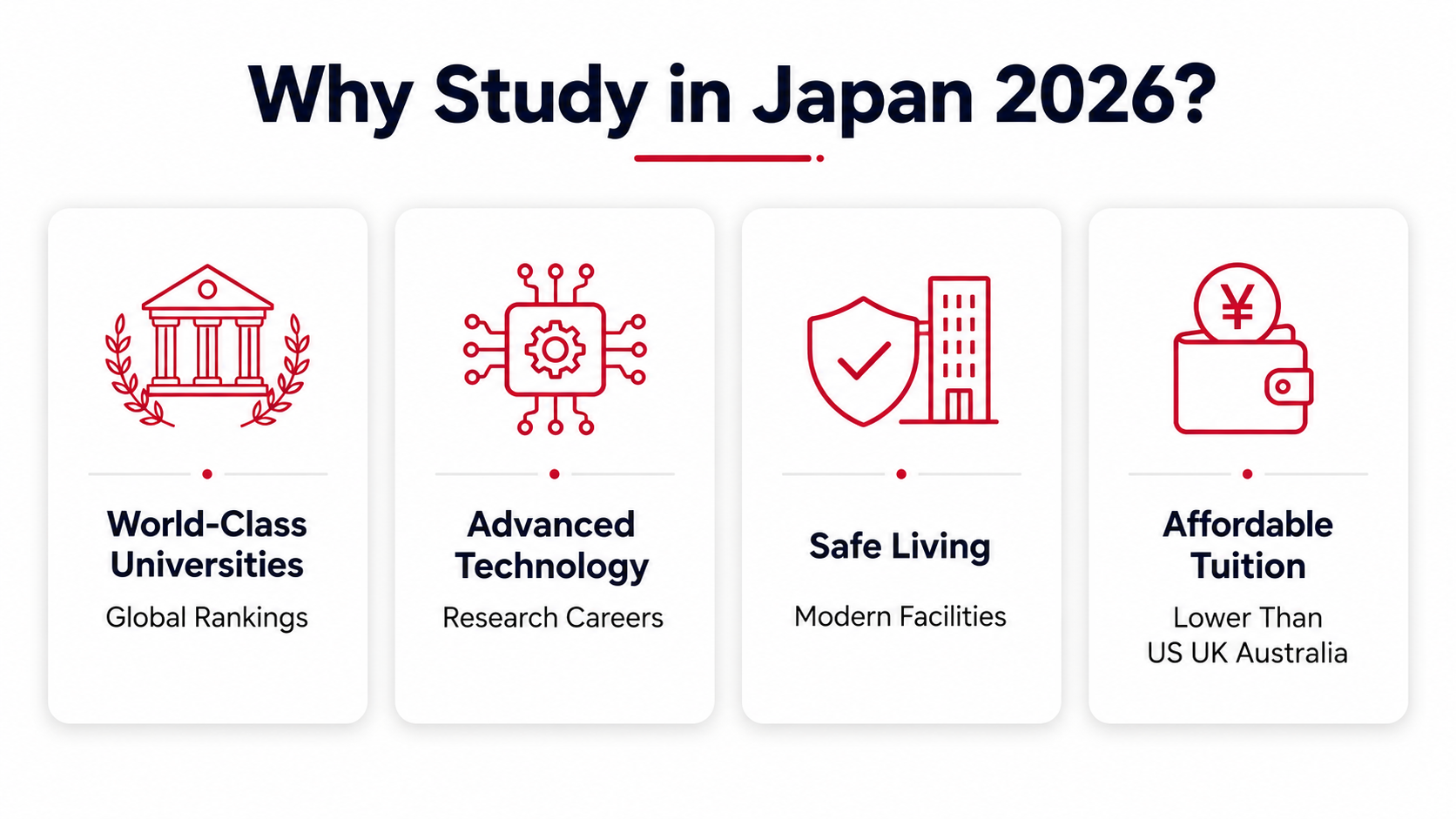
Japan is among the major places of study in the world, and it is characterised by academic excellence, innovation and high industry relevance. Students studying in Japan can acquire internationally recognised degrees and, at the same time, enjoy one of the most sophisticated nations in the world.
The greatest benefits are:
- International students have the advantage of reputed universities with good rankings amongst the various nations around the globe and worthwhile employer networks.
- Japan is a source of competitive international careers with advanced technology, opportunities to research and to gain practical knowledge.
- Learners have good security, modern facilities, efficient transportation and a comfortable living standard.
- The tuition costs tend to be cheaper than in the United States, the United Kingdom and Australia.
- Graduates have the possibility of working in AI, engineering, manufacturing, healthcare, finance, and IT.
Studying in Japan for international students provides a good blend of affordability, education and progress to some families.
Check out: Best Free IELTS Apps in 2026 for Band 7+ Preparation
Understanding the Japanese Education System
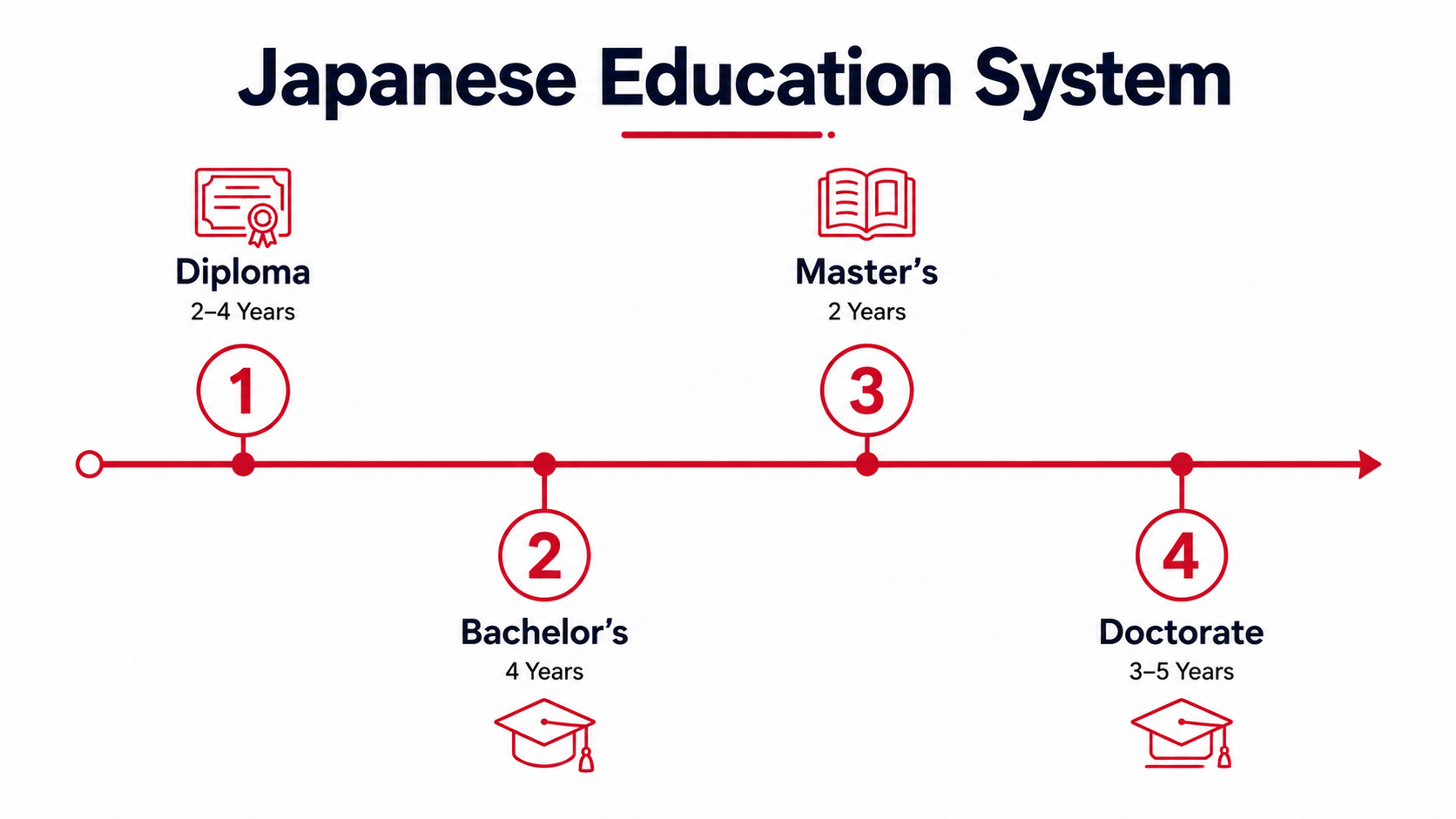
The Japanese education system is characterised by academic excellence, hands-on education and close ties with industries.
|
Qualification |
Duration |
|
Doctorate Degree (PhD degree) |
3–5 Years |
|
Bachelor's Degree (Undergraduate) |
4 Years |
|
Diploma/Certificate (Professional Programs) |
2–4 Years |
|
Master's Degree (Master's) |
2 Years |
The Japanese education system prioritises practical education, research, discipline, and industrial cooperation. English-taught programs are available in many universities, and thus global students have an easier time enrolling on these universities.
With the Japanese education system, added with an ever-growing array of international programs, an increasing number of Indian students are coming across accessible opportunities to pursue higher education.
Ready to turn your study abroad dream into reality? Explore top online programs and expert guidance at Gateway Educonnect Online Courses.
Top 10 Universities to Study in Japan
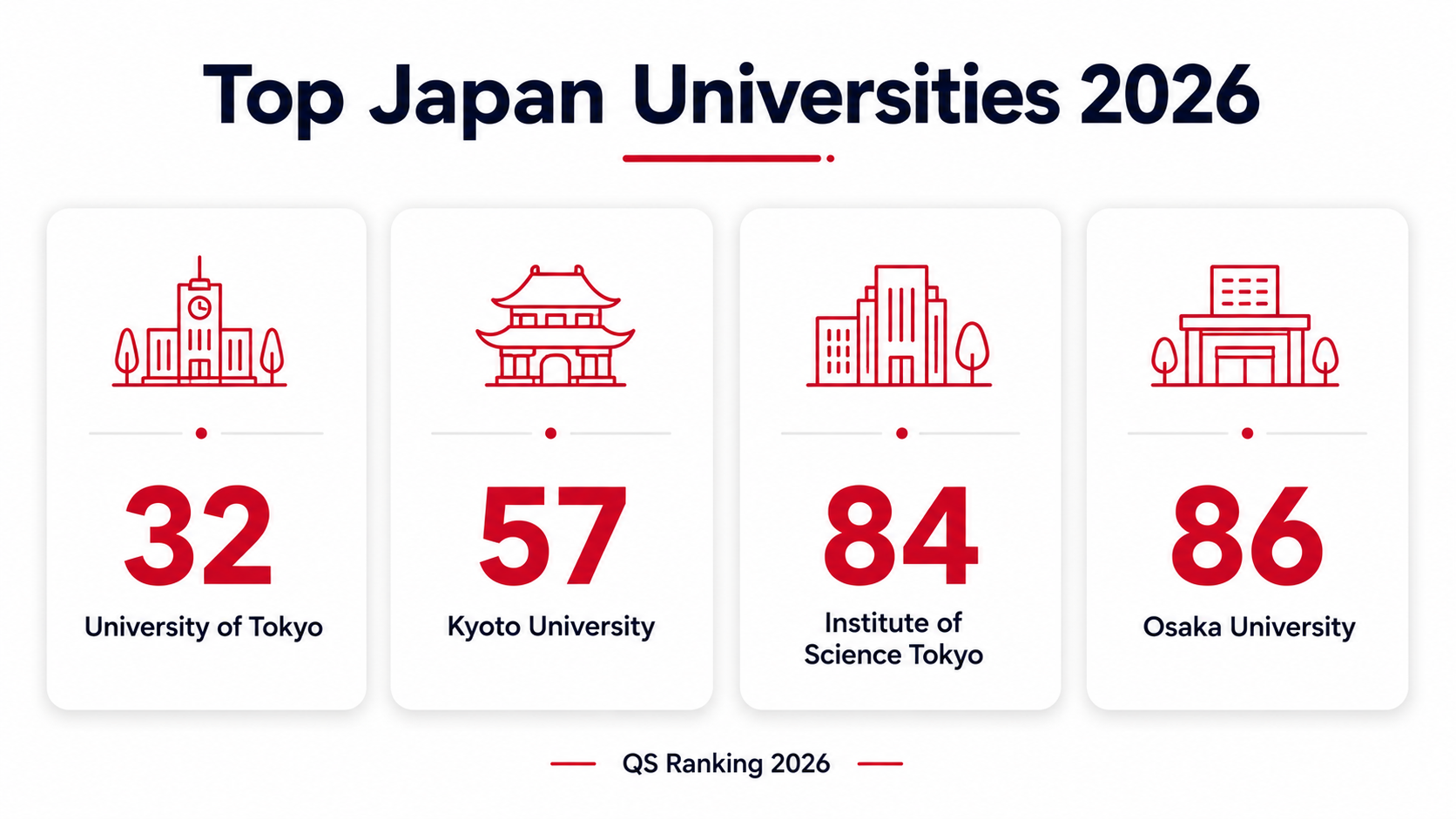
students having an interest in studying in Japan will be able to enroll in some of the most reputed universities in the Asian region, with academic excellence, research centers and extensive international networking.
|
University |
Ranking 2026, QS ranking |
Popular Programs |
|
Kyoto University |
57 |
Engineering, Science, Environmental Studies, Research. |
|
University of Tokyo |
32 |
Business, Engineering, Computer Science, Medicine. |
|
Institute of Science Tokyo |
84 |
Computer Science, Engineering, Robotics. |
|
Waseda University |
181 |
Economics, Business, International Relations |
|
Nagoya University |
152 |
Automotive Research, physics, and engineering. |
|
Kyushu University |
167 |
Information Engineering, Science, Medicine. |
|
Osaka University |
86 |
Business, Technology, Engineering, Healthcare. |
|
Tohoku University |
107 |
Materials Science, Engineering, AI, Research. |
|
Keio University |
188 |
Law, Business, Media Studies, Economics. |
|
Hokkaido University |
173 |
Agriculture, Environmental Science, and Engineering. |
These are the universities with great academic opportunities, research laboratories as well as international career prospects to students intending to Study in Japan.
Check out: Visa Support for Students
What are the Qualifications to Study in Japan?
Some academic Requirements
- A postgraduate candidate ought to possess a recognised undergraduate degree and good grades.
- Undergraduate admissions- In terms of undergraduate admissions, the candidates should have passed the 12th class of any recognised board and have the same requirement which the University of the choice may have.
Language Requirements
The requirements of language also differ according to the course and university.
- General English-taught courses typically will have an IELTS, TOEFL or equivalent requirement.
- Programs taught by Japanese instructors can involve JLPT or other evidence of knowledge of the Japanese language.
Documentation Requirements
The usual Study in Japan requirements usually comprise:
- Formal school and college records and certificates.
- A Statement of Purpose outlining academic goals and reasons for choosing Japan.
- Teacher, professor or professional supervisor letters of Recommendation.
- Financial statements of financial capability to meet the cost of tuition and livelihood.
Proper fulfilment of all Study in Japan requirements and within the time can enhance the chances of admission and visa allowance.
Check Out: Online Study Abroad Programs: Your Gateway to Global Education
How to Study in Japan: Step-by-Step Process?
Step 1: Universities and Courses in research.
- Research on the various universities and courses offered in Japan to research available alternatives that suit your career objectives and areas of academic interest.
- View program design, tuition, career opportunities and scholarship opportunities and then make a final decision on the issue.
Step 2: Validate Eligibility Requirement.
- Ensure you verify the entry conditions of the universities of interest to you, not only in terms of academic requirements, but also in terms of language requirements.
- It is worthwhile to ensure that you are eligible to join the program, having all the program-specific requirements.
Step 3: Collect your academic documents.
- Check appropriate documents like study transcripts, passport copies, and certificates.
- Get both online and hard copies to avoid delays as one is waiting in line to register.
Step 4: Application to your Programmes.
- Fill in the application forms to the end and make sure that the information is correct.
- Submit or upload all the necessary documents prior to the application deadline at the university.
Step 5: Receive offer of Admission.
Successful students are notified or rewarded to be taken into their institutions.
Step 6: Request Student Visa.
Once a student has obtained the admission offer, student can start by acquiring a COE at their institution.
Step 7: Make Accommodation and Travel.
Students are expected to make their health insurance, accommodation, and traveling plans when they are going to Japan.
Check out: 15-Day Study Plan to Ace the IELTS Exam
Cost of Studying in Japan in 2026
Affordability is one of the major benefits of the decision to study in Japan, as it is much cheaper than most of the other favourable study destinations. Although the cost changes depending on the university, city and schedule of life, students usually have an estimation of costs in terms of tuition fees, accommodation, living standard, health insurance and transportation when studying.
|
Type of expenses |
Approx. cost monthly |
Approx. cost annually |
|
Living cost |
₹17,000 – ₹42,000 |
₹2 Lakhs – ₹5 Lakhs |
|
Tuition Fees |
Varies by university |
₹3 Lakhs – ₹8 Lakhs |
|
Health expenses |
₹1,250 – ₹2,500 |
₹15,000 – ₹30,000 |
|
Food or daily costing |
₹12,500 – ₹33,000 |
₹1.5 Lakhs – ₹4 Lakhs |
|
Travelling costing |
₹2,500 – ₹6,000 |
₹30,000 – ₹70,000 |
|
Other expenses |
₹4,000 – ₹8,500 |
₹50,000 – ₹1 Lakh |
International students, given the program of Study in Japan, can achieve this by developing a realistic budget and searching for the availability of scholarships to assist them in covering the total expenses of education.
International Student Scholarships.
Scholarships may become one of the ways to make the cost of studying in Japan lower and make international education less expensive.
There are popular scholarship opportunities such as:
- Japanese Government Scholarship funded by MEXT, Scholarships that can be used to cover all tuition fees, living expenses, and other travel expenses of the eligible student.
- JASSO Scholarship is intended to assist foreign students with a monthly amount of money provided to foreign students in Japanese-approved institutions.
- University Scholarships are provided by the majority of Japanese universities to students who have great academic achievements and future leadership.
- Scholarships provided by the International Foundation to encourage international students to various courses.
Only international students studying in Japan have to apply early and also majority of the scholarships are restricted.
Visa Process for a Japanese Student Visa.
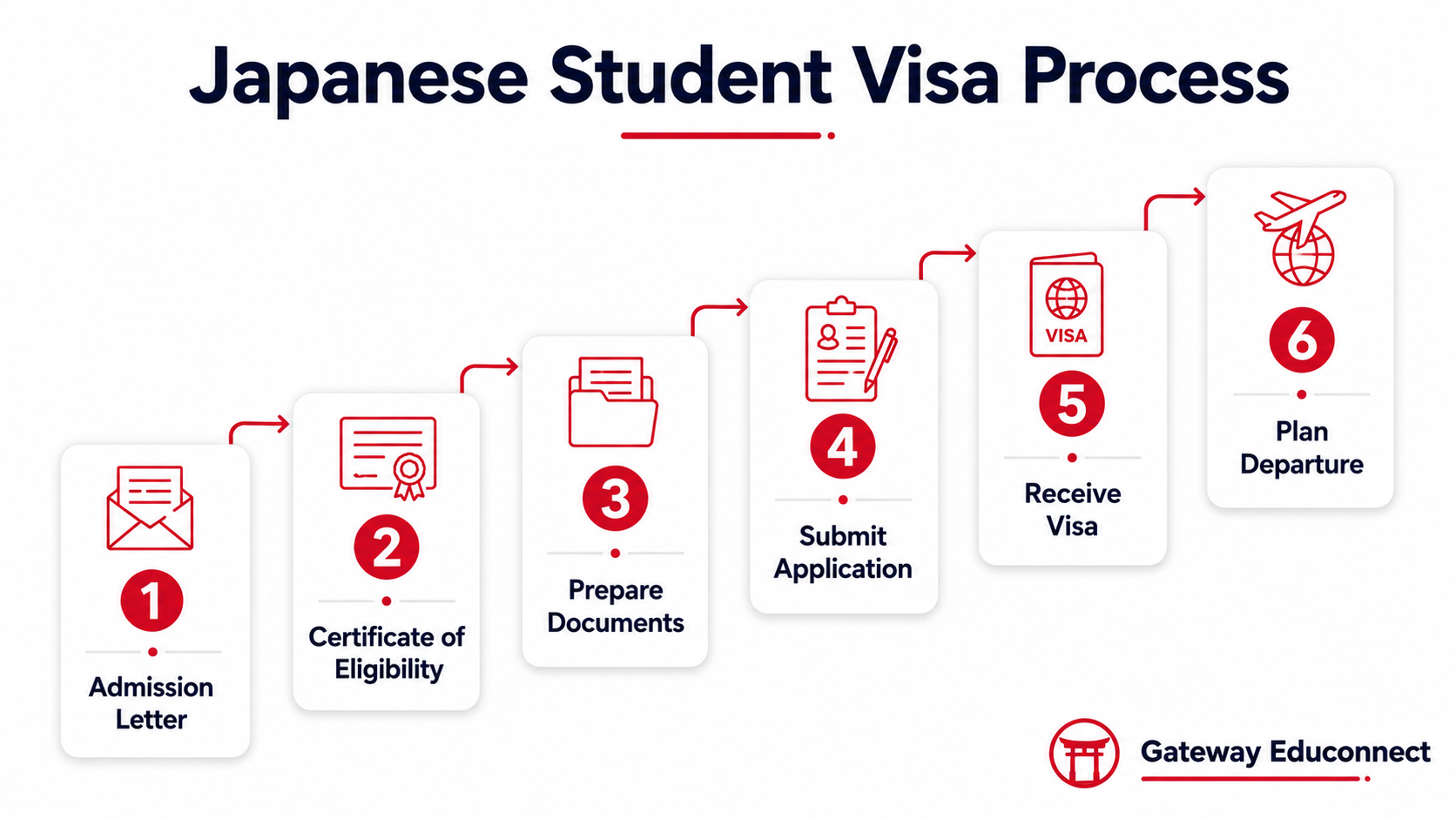
Step 1: Get your admission letter from the universities
Students have to obtain admission in a reputed Japanese university, college or language school before they can apply to get a student visa.
Step 2: Have the Certificate of Eligibility.
Once the admission has been made, the institution makes a COE on behalf of the student. It is a Japanese immigration document that is considered one of the major prerequisites in terms of visa processing.
Step 3: Make the Right Documents.
It will be required that the students bring along with them all the relevant documents that will include a valid passport, COE, admission letter, passport-size photographs and financial documents that will allow them to afford their tuition fee and cost of living.
Step 4: Submit your visa application.
Hand in all the supporting documents of the visa application to Japanese Embassy/consulate in your country and make them processed.
Step 5: Get your Visa and wait to leave.
After you have obtained your visa, you can book accommodation, flights and you have finalize your pre-departure arrangements. An early start will be necessary to make sure that everything has been done to Study in Japan ahead of schedule.
Career Opportunities After Study in Japan
Students who study in Japan have access to a career across technologies, engineering, automotive and business in India.
|
Job Position |
Average Salary Package |
Top Recruiters in India |
|
Software Engineer |
₹5–12 LPA |
Infosys, TCS, HCL Technologies, Wipro |
|
AI & Data Scientist |
₹8–20 LPA |
Accenture, IBM, Tech Mahindra, Infosys |
|
Mechanical Engineer |
₹5–10 LPA |
Mahindra, Tata Motors, Larsen & Toubro |
|
Automotive Engineer |
₹6–12 LPA |
Honda Cars India, Toyota Kirloskar, Maruti Suzuki |
|
Robotics Engineer |
₹8–18 LPA |
Panasonic India, Mitsubishi Electric, Siemens |
|
Business Analyst |
₹6–15 LPA |
Deloitte, EY, KPMG, Cognizant |
|
Supply Chain Manager |
₹7–18 LPA |
Amazon, DHL, Maersk, Flipkart |
|
International Business Executive |
₹6–16 LPA |
Sony India, Hitachi India, Canon India, Fujitsu |
International students attending Study in Japan for international students programs and possessing skills in the Japanese language tend to have a competitive advantage in the job market.
Why Go to Gateway Educonnect in Japan to study?
The proper advice can simplify and even make your Study in Japan experience smoother and easier. At Gateway Educonnect, guiding the students towards making informed decisions and realising their international education aspirations is a personalised approach that we offer.
- Having 15 years+ experience and 23,000+ students counselled, we have been enabling students to live up to their international education aspirations.
- Our team helps in the choice of universities, admissions, scholarships, education loans, lodging and the application for a visa.
- With a One-Click Apply system, students will be able to apply, and within 24 hours, talent may be offered an opportunity through a university of their choice.
- Gateway Educonnect: It provides convenient expert advice to students in its offices located at Udaipur, Pune and Jalandhar.
- Our consultants assist students throughout their Japan study process till the time of departure.
Book your free consultation with Gateway Educonnect today and make the next move towards the dream of studying in Japan.
FAQs
Is Japan a good international student destination?
Yes, studying in Japan among international students provides a good education system, exposure to advanced technology and good career opportunities.
How are the Study in Japan requirements?
Academic transcripts, financial evidence, language test results and university placement certificates are the most important requirements for studying in Japan.
Do the schools in Japan provide English programs?
Yeah, the Japanese education system has a lot of undergraduate and postgraduate programs with lots of English instruction for international students.
Does Japan have a compulsory language to study the Japanese language?
No. There are many English-schooled courses that are taken by foreign students in lots of Japanese universities. However, through having the learning of the fundamentals of Japanese, daily life and communication can be simplified.
Can You Help International Students get employment in Japan?
Yes. Students in their study in Japan programs in programs such as Study in Japan international students can work part-time with restrictions based on visa regulations as well as work restrictions based on the hours of work.
Conclusion
Students who want to receive quality education, be exposed to the world, and have good career opportunities may find a life altering decision to Study in Japan. Japanese education system, a reputed world-known universities, low tuition fees, scholarship programs and safe living environment have continued to draw international students across the globe. Learning about the admission process, the requirements related to the Study in Japan program, the visa process, and general costs may assist students organize their trip to be confident in their plans. Japan has great potential to lead to academic and career development, whether you are in the undergraduate or postgraduate programs. Are you prepared to do something? Get a free consultation with Gateway Educonnect, book it today and get the best tips to have a successful and successful study abroad experience. For more assistance, please visit our study abroad consultancy services and explore our wide range of offerings for students interested in studying in the USA, studying in the UK, studying in Canada, studying in Australia, studying in Ireland, and many other countries.

Author Bio
Abhinav Jain - Founder, Gateway Educonnect and Director.
B.Tech, MBA, AI and Global Education Specialist.
More than 15 years of professional experience in leading students along international routes based on politics and innovation.